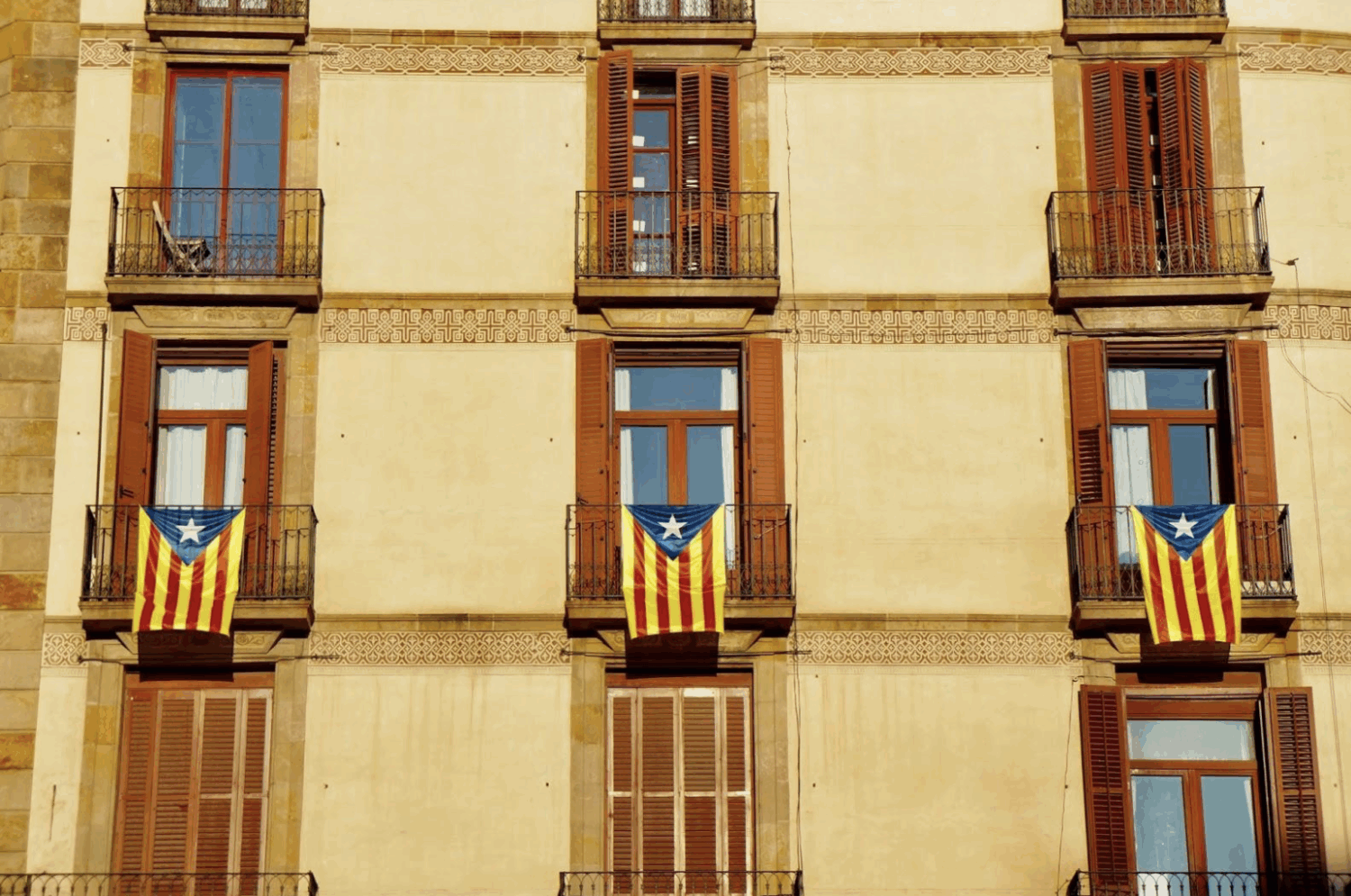
The capital of the autonomous community of Catalonia, Barcelona is a vibrant, artistic city featuring everything from the dark, winding streets of the Gothic Quarter, to the eye-popping, outrageous architecture of Gaudi. Barcelona is a world-famous capital of culture and sport; yet in recent times the city has made headlines for its struggles with overtourism.
In light of this, I did two important things during my trip that affected my experience of Barcelona that I heavily encourage anyone else who travels here to do the same. Firstly, I stayed in a small hotel, instead of one of the myriad short-term rentals that raise housing prices for locals. Secondly, I travelled there in early January, during the tourist off-season. However, even during the off-season, subtle signs of overtourism were unmistakable. Food and drink were pricey, the bus to the Parc Güell was packed to near crowd-crush levels and tacky souvenir shops could be found on every street, having pushed out those which catered to locals.
You shouldn’t be dissuaded from visiting Barcelona—in spite of overtourism, it is well worth a visit. But as always when travelling, remember to plan out your trip carefully and treat the local culture respectfully, ensuring that your visit will be beneficial to the city rather than harmful.
Best of the Gothic Quarter:
- La Rambla (free): Considered an icon of the city, this tree-lined, pedestrian street is lined with all sorts of restaurants, shops and street performers. At one end is the Plaça Catalunya, the central square of the city, and at the other is a monument to Christopher Columbus, who landed here after “discovering” America. It’s quite entertaining to walk through, but it’s packed with tourists at all times and many of the shops along the way reflect this, for better or for worse. 6/10.
- Barcelona Maritime Museum (paid): This museum is a perfect place to relax and wander around after a long day. Housed inside Barcelona’s old Gothic shipyard, it features nautical-themed exhibitions reflecting Barcelona’s history as a seafaring city. The most impressive exhibit is a full scale replica of a 16th-century royal galley. Unlike most other museums in the city, this one seems to be off the tourist trail: there were only four to five other visitors when I was there. Not everyone is interested in boats, it seems. 7/10.
- Cathedral de Barcelona (paid): The three elaborate spires of the 14th-century cathedral tower over the Gothic Quarter, providing a stunning backdrop to the street performers and playing children in the square below. The interior is even more impressive, with a soaring vaulted roof and gilded shrines to the saints throughout. There’s also elevator access to the roof, offering a chance to look up close at the delicately carved angels, crosses and spires. While it’s no Sagrada Familia, the cathedral is still a must-see in its own right. 7/10.
- Picasso Museum Barcelona (paid): While this collection houses few “blockbuster” paintings, it demonstrates the close link between Pablo Picasso and the city of Barcelona where he grew up. Most of the collection features Picasso’s early “Blue Period” work, alongside landscapes of Barcelona. The highlight, however, is a 1957 series of paintings in which Picasso takes the famous painting “Las Meninas” and radically distorts it; with each painting, the once recognizable figures abstract into a fever-dream kaleidoscope of shapes and colors. 8/10.
- Basílica de Santa Maria del Mar (paid): One of the best parts of traveling is stumbling across hidden gems. While wandering around the streets of the Gothic Quarter after visiting the Picasso Museum, I stumbled across this church building, which costs five euros ($5.74 as of writing this) to enter and another five euros to access the roof, so I decided to spend some time here. The 14th-century interior was beautiful—but ruined by the sounds of hammers from ongoing restoration work. However, the view from the roof was stunning, taking in the tightly packed houses of the neighborhood as well as the Sagrada Família in the distance. There was a steady stream of other tourists in pairs or small groups, but sometimes the rooftop felt shockingly empty. Hopefully the Basílica stays this way. 8/10.
- Palau de la Música Catalana (paid): This concert hall, completed in 1908, is a masterpiece of Barcelona’s famous Modernista style. It’s famous for its dazzling interior, with an inverted dome skylight filling the interior with hues of blue and orange, and with fantastic statues springing out from the walls and the arch over the stage. I was there for a flamenco performance—shamelessly touristy, but vivid and sensational against the backdrop of this opulent building. 9/10.
Best of El Eixample:
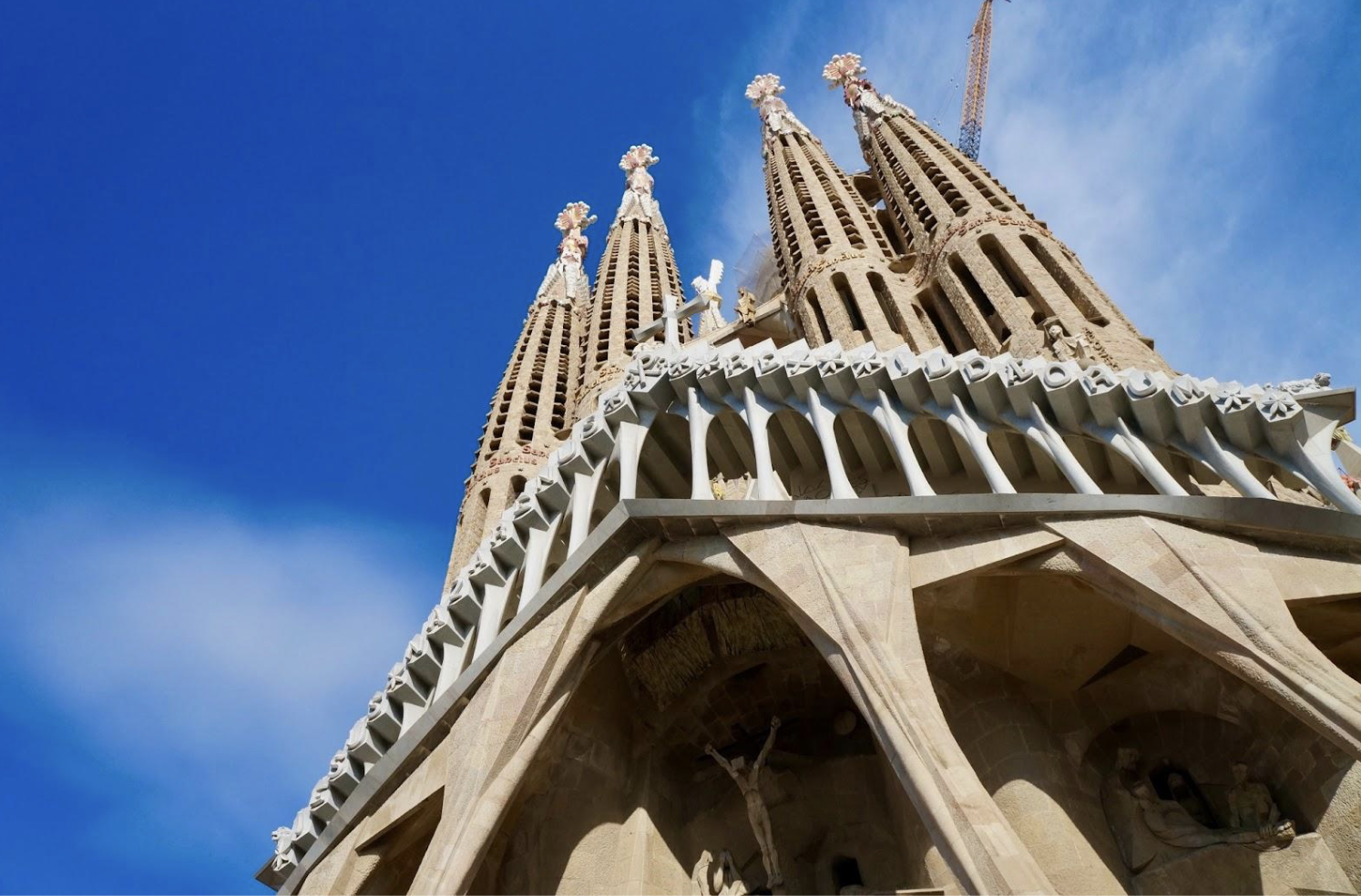
- Sagrada Família (paid): The internationally recognized symbol of Barcelona and Antoni Gaudí’s masterpiece, the Sagrada Família is unlike any other church in the world. In spite of the massive crowds of tourists, it simply can’t be missed, even if it’s been under construction since 1882. While it can be seen from all over the city, it’s truly astonishing up-close, with its two contrasting facades—Nativity and Passion—representing Jesus’ birth and death, respectively, through their sculptures. The interior resembles some sort of enchanted forest with tree-shaped columns soaring to the roof of what is now the tallest church in the world. Multicolored stained-glass windows (though not part of Gaudí’s original plan) coat the nave in warm sunlight filtered through every color in the rainbow. Words are not enough to describe how this looks. Pictures aren’t, either. The Sagrada Família is one of those attractions that must be experienced in-person to get its full effect across. 10/10.
- Hospital de la Santa Creu i Sant Pau (paid): The diagonal Av. de Gaudí links the Sagrada Família with this complex of buildings, built as a hospital by Lluís Domènech i Montaner between 1901 and 1930. Montaner’s architectural ideas were revolutionary: his hospital was built as a series of buildings surrounded by greenery and adorned with exotic domes and spires, with clean, exquisitely decorated interiors for the benefit of patients. Used as a fully functional hospital until 2009, today it’s a museum containing exhibits on the architecture as well as the treatment of patients. It is probably the most unique hospital complex that you will ever visit. 9/10.
- Casa Milà (paid): Built by Gaudí in 1906, this building stands out because of its undulating stone facade that gave it the nickname “La Pedrera,” the stone quarry. There are more surprises inside: two-striking, oval-shaped courtyards, a tunnel of parabola-shaped roof vaults in the attic, and finally, the bizarre sculpture garden that is the roof, with surrealistic chimneys and spires that look like Star Wars helmets, peering out at the city that surrounds them. 9/10.
- Casa Batlló (paid): The most stunning of Gaudí’s houses, the Casa Batlló is also the most crowded and commercialized. However, going in is worth braving the long lines that form on the sidewalk outside. The fantastic exterior exhibits Gaudí’s flair for the dramatic, with mask-shaped balconies and a rooftop resembling the dragon slain by St. George (Catalonia’s patron saint). The inside reflects Gaudí’s love of the natural world, from the vivid ocean blue of the atrium, to the skylights shaped like turtleshells, to the graceful spiral chandelier in the living room. It’s a gorgeous mixture of nature and history that’s decades ahead of its time, considering the building reached its current form in 1906. Tickets will be in high demand, so be sure to book early. 10/10.
Best of Gràcia:
- Casa Viviens (paid): Gaudí’s first major project was this house, built from 1883-1885. Even at this early stage, you can clearly see the budding architect’s genius. The house is covered with geometric patterns of brightly colored tiles that instantly make it stand out from the plain apartment blocks built later. The inside is somewhat low-key but boasts some clever features: a fountain in between the living room and porch that acts as an air-conditioner and a smoking room with a dazzling blue Islamic-style roof. 7/10.
- Parc Güell (paid): This is the last Antoni Gaudí mention in the article, I promise. What began as a luxury residential development in the hills overlooking Barcelona turned into Gaudí’s architectural playground with snaking viaducts, colorful mosaics and a massive, columned hall that supports a public square on its roof. That being said, it’s tricky to get there via public transit, as it’s a 17-minute, uphill walk from the nearest subway stop. While I thought taking the bus line that stops at Parc Güell would save some energy, I learned the hard way that every single other tourist in Barcelona had the same idea. Nonetheless, Parc Güell remains one of the quintessential sights of the city, even with all of the tourists. 8/10.
Best of Montjüc
- Museum Nacional d’Art de Catalunya (paid, free every Saturday after three pm and the first Sunday of each month): Located partway up the hill of Montjüc, this grandiose, domed building is unmissable as it looms over southeastern Barcelona and the Plaça d’Espanya. It’s reached by a series of staircases, past a sequence of cascading fountains that, unfortunately, were not turned on when I visited. Inside, the museum boasts a vivid collection of medieval art, including murals and altars taken from churches in the region. Smaller galleries on the top floor house the more “modern” artists. 7/10.
- Fundació Joan Miró (paid): This modern, concrete building was constructed by the Surrealist artist Joan Miró to exhibit his work as well as works by other artists of his generation. The building itself leaves much to be desired, as I’m no fan of Brutalism, but that’s beyond the point. Miró’s paintings, tapestries and sculptures have a whimsical and even childlike feeling, with stick figures, handprints and splotches of paint. The most interesting piece, however, is a fountain by Alexander Calder that uses liquid mercury in place of water. Created as a memorial to the Franco regime’s oppression of mercury miners, it’s kept inside of a sealed glass chamber to avoid spreading toxic fumes. 8/10.
Montjuïc Castle (paid): At the summit of Montjüc, this fort is served by bus and by cable car—the latter being the more enjoyable option to get there. From the roof, the entire city unfolds before you: a sprawling red-roofed expanse between the mountains and the sea. You can see everything from the Sagrada Família to the bustling container port, accompanied only by the rush of the wind and soaring seagulls (though I’m sure that this place gets much, MUCH, more crowded in the summer season). However, the history of the fort is substantially less pretty; it was used as a prison and execution site during the Spanish Civil War, an atrocity which is explained in a series of exhibits inside. 8/10.