Those who know of “The Merchant of Venice,” one of Shakespeare’s most controversial plays, know of the debate around the central themes of the show: Was the intention of the play antisemitic? Hold Thy Peace and director Laurel Kane ’26 give their answer to that question in their reimagining.
The original version of the play shows the character Shylock, a Jewish moneylender, in a mostly unforgiving light, with the character demanding that the contract he made with Antonio, a fervent Christian and prominent merchant, in which Antonio must pay for breaking his end of the deal with a pound of flesh, be upheld. This demand for payment in flesh is a seeming act of revenge as Antonio had assaulted, spat at and demeaned Shylock many times in the past. In the end, Shylock is defeated by the Christian characters and made to renounce his Judaism. Depending on the production of the show, Shylock can be anything from the villain to the unfortunate, sympathetic hero.
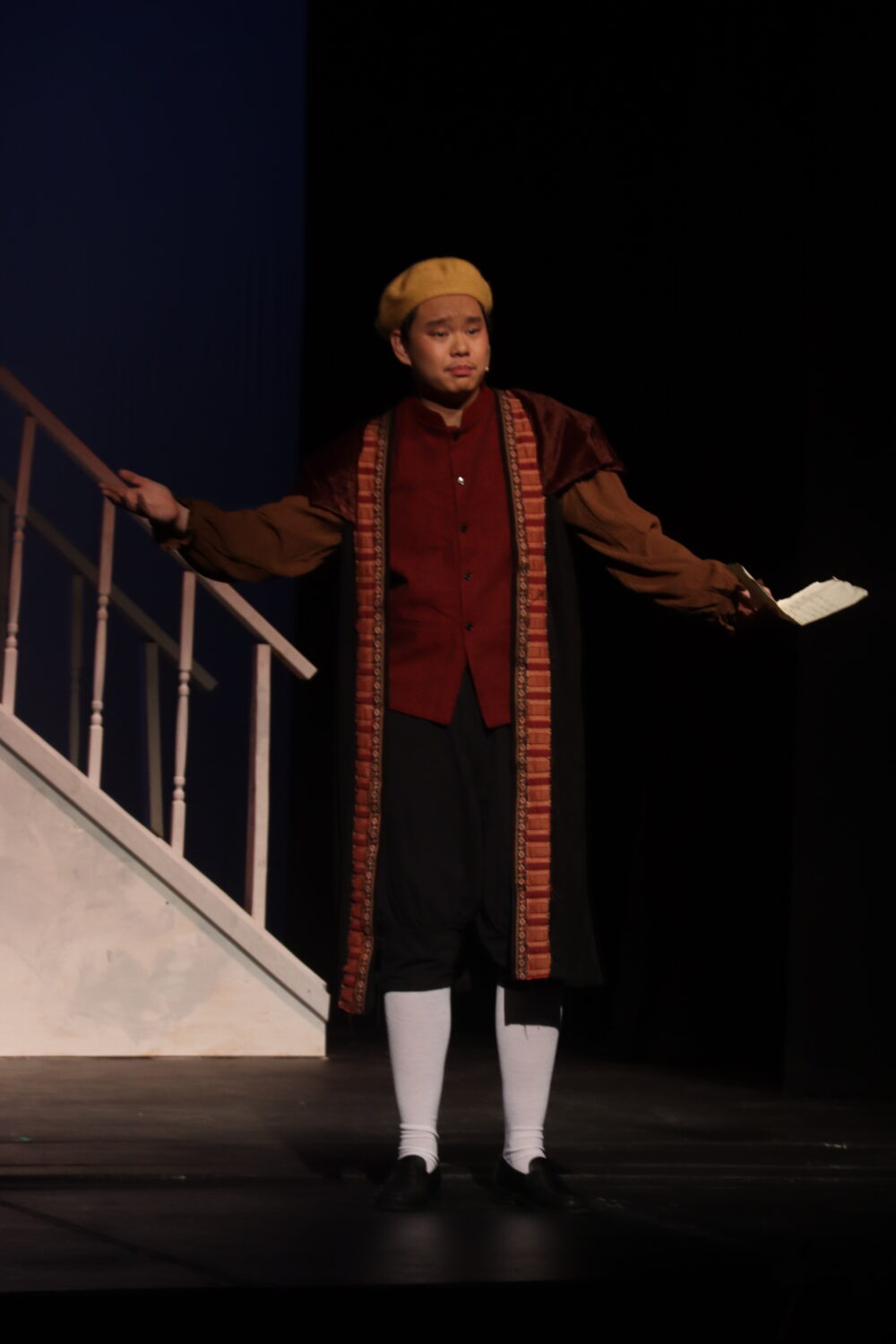
Hold Thy Peace took the latter interpretation to its logical extreme, painting Shylock as a tortured man who lost his daughter and was ruthlessly targeted by the Christian characters. His desire for revenge is made sympathetic partially through the gut-wrenching performance from Phoenix Yuan ’26, where the audience is made to feel Shylock’s desperation to be seen as human. The famous “Hath a Jew not eyes” monologue is played with full sincerity, questioning the morality of the many antisemitic characters throughout the play. The audience watches Shylock beaten and insulted many times and can’t help but feel sympathy for the man, even as he demands a pound of flesh.
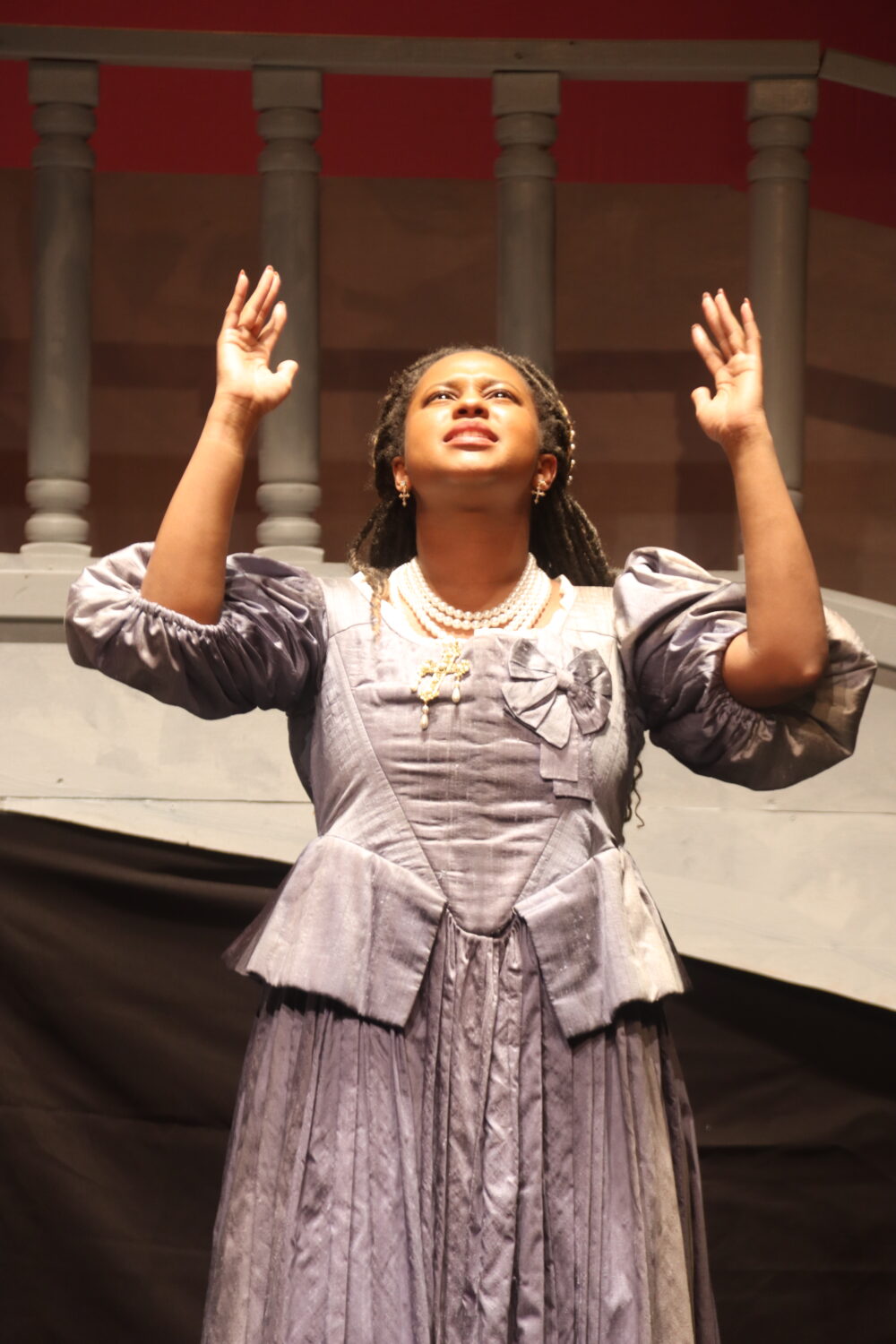
Shylock’s daughter, Jessica, denounces her Judaism to pursue her love of a Christian man, Lorenzo (played by Noam Radwin ’28). Jessica, played by Maya Gonta ’28, is a woman desperate to find a place in which she belongs; when her romance with Lorenzo turns sour at the end of the play, she strips off the cross she had been wearing and cries alone on stage. This is the moment where Hold Thy Peace makes their first change to the bard’s original script. Jessica and Shylock are united once again; both having denounced their faith and reduced to nothing, they embrace on stage, crying into each other. This moment is bittersweet, with the father and daughter finally reunited, but at what cost?
Another large aspect of anti-semitism in the original play is found in the character Launcelot Gobbo. When played straight, the character is a menacing, deeply antisemitic character who leaves the house of Shylock due to his Judaism. However, the portrayal of Launcelot in this production, by Amadeus Coleman ’28, is a fantastic satire of antisemitic tropes. Coleman is dressed in clothes closely resembling those of a court jester and is portrayed as a crazed lunatic whose antisemitic ideas come from a deep-rooted mental instability. With a large stage presence and magnificent physical acting, Launcelot is brought to life as a menacing idiot whose ideas should be rejected outright.
Xavian Plasencia’s ’28 performance as Antonio is nuanced and moody, with the pre-existing queer subtext of the character played up without making the character a stereotype. John Henry Holcomb ’27 plays alongside Plasencia as Bassanio, Antonio’s best friend and the man Antonio makes the deal with Shylock for, as well as the love interest of Portia. Holcomb’s portrayal is sincere and harrowing, with the kiss between the two men before the assumed death of Antonio and the internal strife over his love for both Antonio and Portia made heartbreaking through his performance.
Jateja Spriggs ’28 brings the character of Portia to life with the emotional nuance of the character displayed through her use of physical and facial acting. Spriggs brought a level of tragic acceptance to the first act of the show, which was wonderfully contrasted with her joy at her union with Bassanio. Alongside Casadie Parent ’27, who plays Nerissa, Portia’s handmaiden, the two bring to life friendship and companionship. While Parent might have had few lines, she made what she was given shine, taking over the stage even when her character wasn’t speaking.
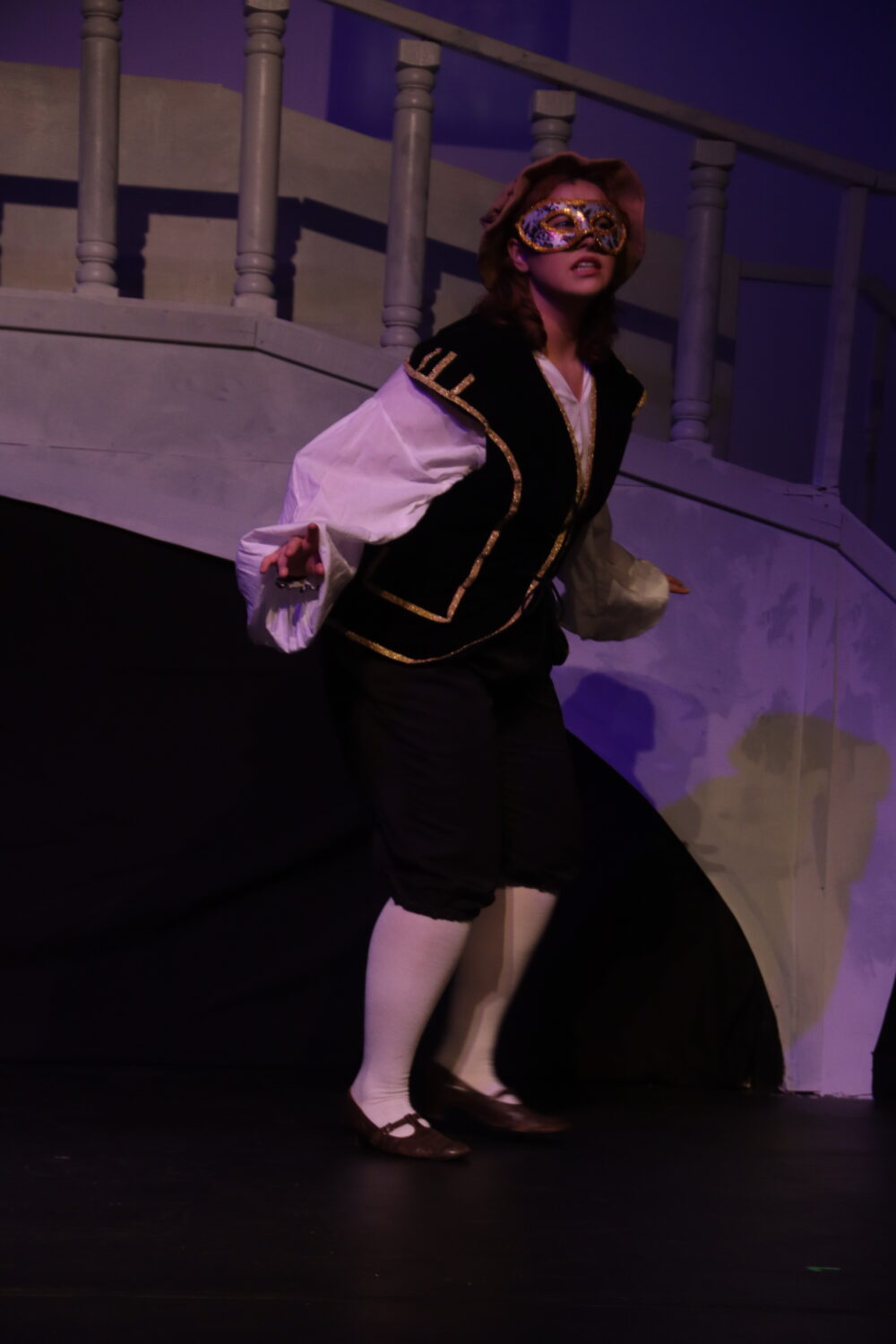
The final two characters in the show were the duo Salanio, played by Em Clemens ’28, and Gratiano, Kaitlyn Farrin ’28. Together, Clemens and Farrin bring these two borderline evil characters to life. Galavanting across the stage and making antisemitism look lame, the pair were responsible for much of the comedy of the production. Whether it was the unsettling performance of hatred towards Shylock from Clemens or the outright anger and hatred portrayed by Farrin, it isn’t hard to see why these two were picked for the roles.
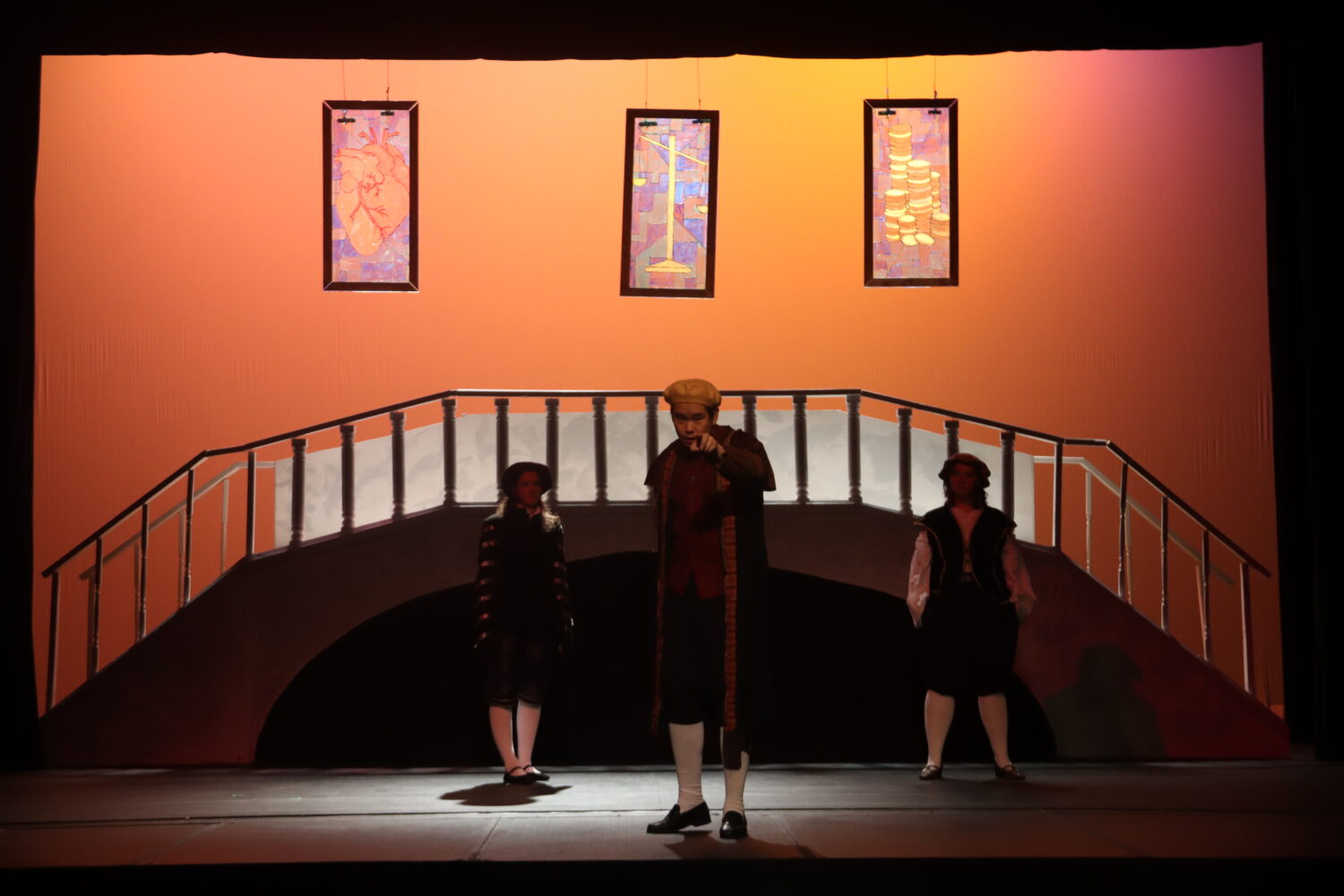
Beyond the acting, the production of the show was fantastic. With dynamic lighting that reacted with the actors, done by Celi Shandell ’26 and Eva Levine ’28, and the wonderfully accurate costuming, by Eva Sanborn ’26 and Ellen Richards ’27, the show was brought to life. Everyone in this production should be proud of the work they have done, bringing a deeply flawed play into modernity.
Editor’s note: Arts Editor Eva Levine ’28 was not involved in the writing or editing of this article.